
Search engine optimization, commonly called SEO, is one of the most important parts of building a successful website. Whether you run a small business website, an online store, a local service company, or a blog, your website needs to be easy for both people and search engines to understand.
SEO best practices have changed a lot over the years. Older strategies like keyword stuffing, link exchanges, and writing only for search engines no longer work the way they once did. Today, successful SEO focuses on helpful content, fast website performance, mobile-friendly design, strong site structure, and a better overall user experience.
The goal of this guide is to explain the most important SEO best practices you can use to improve your website rankings, attract more organic traffic, and create a better experience for your visitors.
There Are No Quick SEO Shortcuts
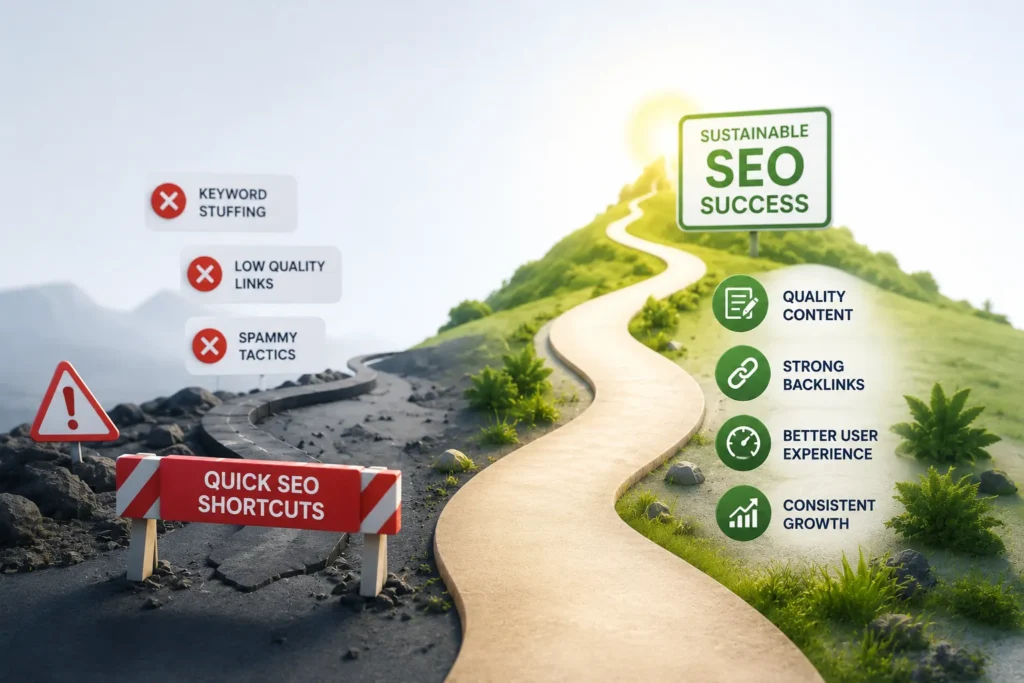
If someone promises guaranteed first-page rankings overnight, it is usually a warning sign. SEO takes time, consistency, and ongoing improvement. Search engines are designed to reward websites that provide useful, trustworthy, and relevant information.
The best long-term SEO strategy is simple: create helpful content, make your website easy to use, and provide real value to your audience.
1. Understand Search Intent
Search intent is the reason behind a person’s search. Before writing a page or blog post, ask yourself what the visitor is really trying to find.
Good SEO starts by matching your content to the user’s intent. Your page should answer the question clearly, provide useful details, and guide the visitor toward the next step.
2. Use Keywords Naturally
Keywords still matter, but they should be used naturally. Modern search engines understand related words, phrases, and context much better than they did in the past.
Your main keyword should appear in important areas of the page, including the title, URL, first paragraph, at least one heading, meta description, and image alt text when appropriate.
For this article, the focus keyword is SEO best practices. That phrase should appear naturally throughout the content without sounding forced.
3. Write Helpful, High-Quality Content
High-quality content is one of the strongest parts of modern SEO. Your content should answer real questions, solve problems, and give visitors information they can actually use.
Good content is clear, organized, accurate, and easy to read. Every section should help the reader understand the topic better.
4. Optimize Page Titles
Your page title is one of the first things people see in search results. A strong title can improve click-through rates and help search engines understand what your page is about.
A good SEO title should be clear, specific, and include your main keyword near the beginning.
5. Write Better Meta Descriptions
A meta description is the short summary that may appear below your title in search results. While it may not directly improve rankings, it can help increase clicks from search results.
6. Use Clear Headings
Headings help organize your content. They also make your page easier to scan for both visitors and search engines.
Use one main H1 title for the page. Then use H2 headings for major sections and H3 headings for supporting points when needed.
7. Improve Internal Linking
Internal links connect one page of your website to another. They help visitors find related information and help search engines understand your website structure.
For example, you can link to related services such as web hosting, WordPress hosting, website design, and SSL certificates.
8. Earn Quality Backlinks
Backlinks are links from other websites to your website. They can help build trust and authority, but quality matters much more than quantity.
Avoid buying links, joining link schemes, or using spammy backlink tactics. Instead, focus on earning links by publishing helpful resources, guides, tutorials, and original content.
9. Make Your Website Mobile-Friendly
Most people browse the internet from mobile devices. Because of this, your website needs to look and function properly on phones and tablets.
A mobile-friendly website should have readable text, easy navigation, properly sized buttons, responsive images, and pages that load quickly.
10. Improve Website Speed
Website speed is important for both SEO and user experience. Slow pages can frustrate visitors and cause them to leave before they read your content or contact your business.
To improve website speed, compress images, use WebP image files, enable caching, remove unnecessary scripts, use reliable hosting, and consider using a content delivery network.
11. Optimize Images
Images can make your content more engaging, but they need to be optimized correctly. Large image files can slow down your website, especially on mobile devices.
Use compressed images and modern file formats such as WebP whenever possible. Image file names should also be descriptive.
12. Use External Authority Links
Helpful external links can improve the usefulness of your content. Linking to trusted sources gives readers a way to verify information and learn more.
Useful SEO resources include the Google Search Central documentation, Google Search Console, PageSpeed Insights, and the Google Search Central Blog.
13. Focus on Technical SEO
Technical SEO helps search engines crawl, understand, and index your website properly. Even great content can struggle if your website has technical problems.
Important technical SEO basics include having a clean URL structure, fixing broken links, using HTTPS, submitting an XML sitemap, avoiding duplicate content, and making sure important pages are indexable.
14. Add Structured Data When Helpful
Structured data, also called schema markup, helps search engines better understand your content. It can also make your search result more attractive when eligible for rich results.
Common schema types include FAQ schema, article schema, local business schema, product schema, and review schema.
15. Monitor SEO Performance
SEO is not something you do once and forget. You should regularly review your website’s performance and look for ways to improve.
Google Search Console can show which keywords bring visitors to your website, which pages receive impressions, and whether your site has indexing problems.
Common SEO Mistakes to Avoid
Many websites struggle with SEO because they repeat the same basic mistakes. Some of the most common SEO mistakes include writing thin content, ignoring mobile users, using slow images, forgetting internal links, and creating pages without a clear keyword target.
Local SEO Best Practices
If your business serves a local area, local SEO should be part of your strategy. Local SEO helps your business appear when people search for services near them.
Important local SEO steps include optimizing your Google Business Profile, keeping your name, address, and phone number consistent, collecting customer reviews, adding location pages when appropriate, and creating helpful local content.
SEO and AI Search Results
Search is continuing to change as AI-generated answers become more common. This makes helpful, well-structured content even more important.
To improve your chances of being found in modern search results, answer questions clearly, use simple explanations, organize content with headings, and include trustworthy information.
Conclusion
SEO best practices continue to change, but the foundation remains the same. Your website should be helpful, fast, secure, mobile-friendly, and easy to understand.
Instead of looking for shortcuts, focus on creating useful content, improving your website structure, optimizing performance, and building trust with your audience.
When you follow these SEO best practices consistently, your website has a better chance of improving rankings, attracting more organic traffic, and turning visitors into customers.