
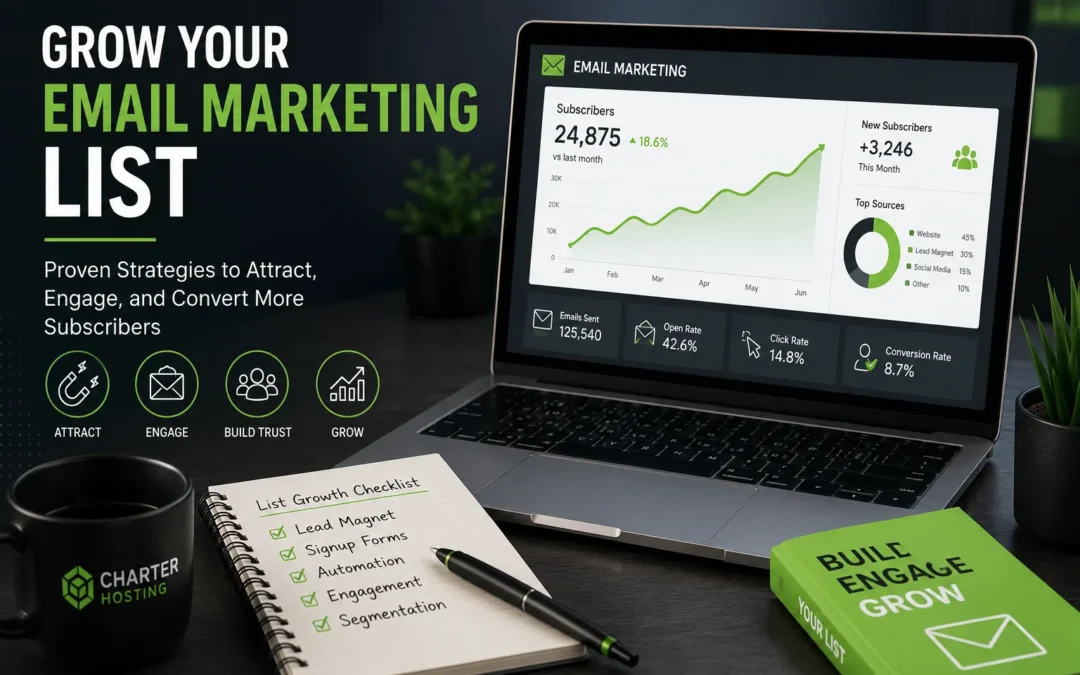
Learning how to grow your email marketing list is one of the most valuable things you can do for your business website. Social media traffic can change overnight, search rankings can move up or down, and paid ads can get expensive. Your email list gives you a direct way to stay connected with people who already showed interest in your business.
A strong email list can help you promote new services, announce special offers, share helpful content, bring visitors back to your website, and build long-term trust with your audience. The key is to grow your list the right way. You want real subscribers who actually want to hear from you, not random contacts who never open your emails.
In this guide, we will cover practical ways to grow your email marketing list using your website, lead magnets, signup forms, landing pages, automation, and better email marketing practices.
Why Growing Your Email Marketing List Still Matters
Email marketing remains one of the most reliable ways to communicate with customers and website visitors. When someone joins your email list, they are giving you permission to contact them directly. That makes your email list different from most other marketing channels.
With social media, you do not control who sees your posts. With search engines, rankings can change. With email, you can send helpful information directly to your subscribers. That makes email marketing useful for service businesses, online stores, web hosting companies, local businesses, bloggers, contractors, and almost any website owner.
When you grow your email marketing list, you are also building a long-term business asset. A quality list can help you:
- Bring visitors back to your website
- Promote new blog posts, products, or services
- Share discounts and special offers
- Educate potential customers
- Build trust before someone buys
- Reduce dependence on ads and social media
The goal is not just to collect as many email addresses as possible. The goal is to attract people who are interested in what your business offers.
Create a Valuable Lead Magnet
One of the best ways to grow your email marketing list is to offer something valuable in exchange for an email address. This is often called a lead magnet.
A lead magnet gives visitors a reason to subscribe. Instead of simply saying “Join our newsletter,” give them something useful, helpful, or exclusive.
Good lead magnet ideas include:
- A free checklist
- A downloadable guide
- A coupon or discount
- A free quote request form
- A beginner’s tutorial
- A comparison guide
- A template or worksheet
- A short email course
For example, a web hosting company could offer a free website launch checklist. A junk removal company could offer a moving cleanout checklist. A contractor could offer a home maintenance guide. The lead magnet should match what your audience already wants.
The better your offer is, the easier it becomes to grow your email marketing list with qualified subscribers.
Optimize Your Website Signup Forms
Your website should make it easy for visitors to subscribe. If your signup form is hidden at the bottom of one page, most people will never see it. A good signup form should be visible, simple, and clear.
You can place signup forms in several areas of your website, including:
- The homepage
- The blog sidebar
- Below blog posts
- Inside blog content
- The footer
- Landing pages
- Contact pages
- Exit-intent popups
Keep the form short. In most cases, asking for a name and email address is enough. The more fields you add, the fewer people will complete the form.
Your form headline should explain the benefit. Instead of using a generic message like “Subscribe,” try something more specific:
- Get weekly website tips
- Download the free website launch checklist
- Get hosting and security tips in your inbox
- Join our list for special offers and updates
Small changes to form placement and wording can make a big difference when trying to grow your email marketing list.
Use Double Opt-In for Better Subscribers
Double opt-in means a subscriber must confirm their email address before being fully added to your list. After they sign up, they receive a confirmation email asking them to verify their subscription.
This extra step can improve the quality of your list. It helps reduce fake email addresses, spam signups, typing mistakes, and people who did not really intend to subscribe.
Although double opt-in may result in fewer total subscribers, the subscribers you keep are usually more engaged. That can help improve open rates, click rates, and email deliverability.
If your goal is to grow your email marketing list with people who actually want your content, double opt-in is worth considering.
Offer Exclusive Content and Discounts
People are more likely to subscribe when they receive something they cannot get anywhere else. Exclusive content gives visitors a reason to join your list instead of just browsing your website and leaving.
Exclusive email content can include:
- Subscriber-only tips
- Early access to new posts
- Special discounts
- Private tutorials
- Monthly resource roundups
- Limited-time offers
- Service announcements
If you run an online store, a discount can work well. If you run a service business, a helpful checklist or guide may work better. If you publish educational content, exclusive tutorials can help you grow your email marketing list with loyal readers.
Leverage Social Media to Grow Your List
Social media can help bring attention to your email list, but the goal should be to move followers from social platforms to your own website or landing page.
You can promote your email list on social media by:
- Sharing your lead magnet
- Adding a signup link to your profile
- Posting newsletter previews
- Promoting subscriber-only discounts
- Sharing clips from your email content
- Running giveaways that require email signup
Do not rely only on social media followers. Social media platforms control reach, algorithms, and visibility. Your email list gives you more control. That is why many businesses use social media as a tool to grow your email marketing list.
Create High-Converting Landing Pages
A landing page is a focused page designed for one main action. In this case, the action is joining your email list.
A good email signup landing page should include:
- A clear headline
- A short explanation of the offer
- A simple signup form
- A strong call to action
- A few benefits
- Trust signals or testimonials
- A clean design without distractions
For example, instead of sending visitors to a general homepage, you can send them to a page that says, “Download Our Free Website Launch Checklist.” That page should explain what they will receive and why it is useful.
Landing pages are especially helpful if you are using ads, social media campaigns, QR codes, or blog CTAs to grow your email marketing list.
Use Email Automation to Welcome New Subscribers
Once someone subscribes, do not leave them waiting. Send an automatic welcome email right away. A welcome email helps set expectations and starts the relationship on the right foot.
Your welcome email can include:
- A thank-you message
- The promised download or offer
- A short introduction to your business
- Helpful links to popular content
- What subscribers can expect next
- A call to action
You can also create a short welcome sequence. For example, a web hosting business might send:
- Email 1: Welcome and free checklist
- Email 2: Tips for choosing the right hosting plan
- Email 3: Website security basics
- Email 4: Website speed and performance tips
- Email 5: Invitation to compare hosting plans
Automation helps you stay consistent. It also helps new subscribers understand your value before you ask them to buy anything.
Segment Your Subscribers Early
Not every subscriber is interested in the same thing. Some may want WordPress tips. Others may want hosting deals. Some may be existing customers, while others are still comparing options.
Segmentation means organizing your subscribers into groups based on their interests, actions, or needs.
You can segment your list by:
- Topic interest
- Signup form used
- Lead magnet downloaded
- Customer status
- Location
- Website activity
- Past purchases
Segmentation helps you send more relevant emails. More relevant emails usually lead to better engagement. That makes your list more valuable as it grows.
Keep Your Email List Clean and Engaged
Growing your list is important, but maintaining list quality is just as important. A large list with low engagement can hurt your email performance.
To keep your list healthy, remove invalid addresses, monitor bounced emails, and pay attention to subscribers who never open your messages. Some businesses run re-engagement campaigns before removing inactive subscribers.
A clean email list can help improve:
- Open rates
- Click rates
- Deliverability
- Sender reputation
- Campaign performance
If you want to grow your email marketing list the right way, focus on quality and engagement instead of only total subscriber count.
Use Blog Content to Collect Subscribers
Your blog is one of the best places to collect email subscribers. People reading your blog are already interested in your topic. That makes them more likely to subscribe if your offer matches the article they are reading.
For example, a blog post about website security could include a signup form offering a free website security checklist. A blog post about domain names could offer a domain registration guide. A post about WordPress speed could offer a performance checklist.
Helpful related articles you may want to link to include:
- Linux Server Basic Commands
- What Is the Domain Renewal Grace Period?
- ISPConfig 3
- Beginner Guide to Domain Registration
- What Is a Web Application Firewall?
Internal links help visitors discover more of your content and can also support your SEO structure.
Add Signup Forms to Your Best Pages
Not every page on your website receives the same amount of traffic. Check your analytics to find your most visited pages. These are often the best places to add email signup forms.
Good places to test signup forms include:
- High-traffic blog posts
- Homepage sections
- Service pages
- Pricing pages
- Resource pages
- Checkout or quote request pages
When you place signup forms on pages that already receive visitors, you can grow your email marketing list without needing more traffic right away.
Use Clear Calls to Action
A call to action tells visitors what to do next. If your signup form does not clearly explain the next step, people may ignore it.
Instead of using a button that only says “Submit,” use action-focused wording such as:
- Get the Free Guide
- Join the Newsletter
- Send Me the Checklist
- Get Weekly Tips
- Claim My Discount
Your CTA should match the offer. If you are giving away a checklist, mention the checklist. If subscribers are joining a newsletter, tell them what kind of tips they will receive.
Make Signup Forms Mobile-Friendly
Many website visitors browse from phones and tablets. If your signup forms are hard to use on smaller screens, you may lose subscribers.
Make sure your forms are easy to read, easy to tap, and not too large on mobile devices. Avoid popups that cover the entire screen or are difficult to close. A poor mobile experience can frustrate visitors and reduce conversions.
A mobile-friendly website can help you collect more subscribers from blog readers, social media visitors, and local search traffic.
Avoid Buying Email Lists
Buying an email list may seem like a fast way to grow, but it is usually a bad idea. Purchased lists often contain people who never asked to hear from your business. That can lead to low engagement, spam complaints, poor deliverability, and damage to your brand reputation.
The better approach is to build a permission-based list. Permission-based email marketing means people choose to subscribe because they are interested in your content, services, or offers.
If you want to grow your email marketing list in a way that supports long-term business growth, avoid shortcuts that damage trust.
Email Marketing List Growth Mistakes to Avoid
Some businesses struggle with email marketing because they focus only on collecting addresses instead of creating a good subscriber experience.
Common mistakes include:
- Using unclear signup forms
- Offering no real reason to subscribe
- Sending too many promotional emails
- Ignoring mobile users
- Not sending a welcome email
- Failing to segment subscribers
- Buying email lists
- Not cleaning inactive subscribers
- Using misleading subject lines
- Making it hard to unsubscribe
A good email strategy should respect the subscriber. Be clear about what they are signing up for and send content that is actually useful.
Helpful Tools for Email List Growth
There are many tools that can help you build and manage your email list. Popular email marketing platforms often include signup forms, landing pages, automation, segmentation, analytics, and compliance tools.
You may want to review resources from trusted email marketing platforms such as Mailchimp and permission-based marketing guides from companies like Bloomreach.
No matter which tool you choose, the strategy matters most. Your website, offer, content, and follow-up emails all work together to help you grow your email marketing list.
Final Thoughts
The best way to grow your email marketing list is to give people a clear reason to subscribe and then continue providing value after they join. A strong email list is not built from shortcuts. It is built through helpful content, useful offers, clear forms, consistent communication, and trust.
Start with one strong lead magnet, place signup forms on your most important pages, create a simple welcome email, and keep your list clean. Over time, these steps can help turn website visitors into subscribers, subscribers into customers, and customers into long-term supporters of your business.
Frequently Asked Questions
What is the best way to grow your email marketing list?
The best way to grow your email marketing list is to offer something valuable, such as a checklist, guide, discount, or exclusive content, in exchange for a visitor’s email address. Your signup form should be easy to find and simple to complete.
Should I use double opt-in for email subscribers?
Double opt-in is a good option if you want a cleaner and more engaged list. It helps confirm that subscribers entered a valid email address and actually want to receive your emails.
How often should I email my list?
It depends on your audience and business. Many businesses send weekly, biweekly, or monthly emails. The most important thing is to be consistent and send useful content instead of only promotions.
Is it okay to buy an email list?
No. Buying an email list is not recommended. Purchased lists usually contain people who did not give you permission to contact them, which can lead to spam complaints, poor engagement, and deliverability problems.
Where should I place email signup forms on my website?
Good places include your homepage, blog posts, footer, sidebar, landing pages, and high-traffic service pages. You should test different placements to see which ones convert best.