
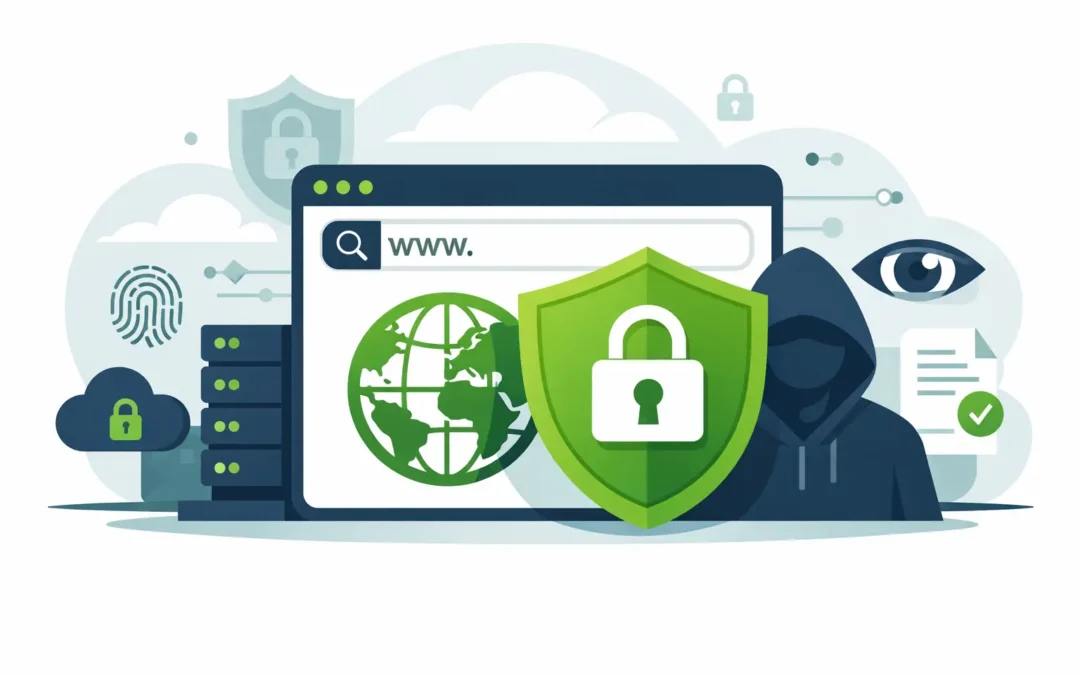
Register a domain name, and you are not just claiming a web address. You are also creating a public record. That is where the question what is domain privacy protection? starts to matter for business owners, bloggers, agencies, and anyone launching a site they want to keep professional and secure.
Domain privacy protection is a service that hides your personal contact details from the public WHOIS database. Without it, information tied to your domain registration may be visible to anyone looking it up, including your name, email address, phone number, and mailing address, depending on the domain extension and current registration rules. With privacy protection enabled, that public record is replaced with proxy or masked contact details.
For many website owners, that sounds like a small feature. In practice, it can make a real difference in reducing spam, limiting unwanted outreach, and protecting personal information from being scraped by bots or bad actors.
What is domain privacy protection and why does it exist?
Every domain name has registration data attached to it. Historically, that information has been published through WHOIS, a public lookup system that helps identify who registered a domain and how they can be contacted. The original idea was transparency. If there was a legal issue, trademark concern, or technical problem, someone needed a way to reach the domain owner.
That public access also created a downside. Spammers, telemarketers, scammers, and data harvesters could use the same system to collect contact details at scale. Domain privacy protection exists to reduce that exposure while still allowing the domain to remain registered and functional.
Instead of listing your direct personal or business information in the public record, the registrar or privacy provider publishes alternate contact information on your behalf. Messages may still be routed to you when necessary, but your actual details are not sitting openly in a searchable database.
How domain privacy protection works
When you register a domain, your registrar collects required registrant details. If privacy protection is available and enabled, those details stay on file with the registrar but are not displayed publicly in full. The public record may show generic replacement data, a forwarding email, or the contact details of a privacy service.
The domain still belongs to you. Privacy protection does not transfer ownership, change your DNS settings, or affect how your website runs. It simply changes what outside users can see when they search registration records.
That said, there is some nuance. Not every domain extension handles WHOIS visibility the same way. Some country-code domains have different rules. Some top-level domains do not support privacy services at all. In other cases, privacy is effectively built in because public records are already limited by registrar policies or privacy regulations.
What information does it hide?
The exact fields vary, but domain privacy protection commonly masks your registrant name, organization, street address, phone number, and email address. For a solo business owner using a home address or personal cell phone, that can be a meaningful layer of protection.
This matters just as much for small teams and agencies. If your domain registration uses a staff member’s direct contact details, that information can become a target for phishing attempts or unwanted sales outreach. Keeping those details private reduces noise and lowers risk.
It is not a replacement for broader website security, but it helps close an unnecessary exposure point.
The main benefits of domain privacy protection
The first benefit is simple: less spam. Public WHOIS records have long been used by marketers and automated bots to collect fresh contact data. If you have ever registered a domain and suddenly received a wave of emails and calls, that is usually not a coincidence.
The second benefit is identity protection. Publicly exposing your name, address, and phone number can create privacy concerns, especially for freelancers, bloggers, nonprofits, or founders working from home. Domain privacy protection helps keep that information out of easy reach.
The third benefit is security. Attackers often gather small pieces of public data to build more convincing phishing emails or impersonation attempts. Hiding domain registration details does not stop every threat, but it removes one easy source of information.
There is also a professionalism factor. Businesses generally want customer communication to happen through official channels, not through a random contact record attached to a domain lookup. Privacy protection helps keep your public presence cleaner and more controlled.
What domain privacy protection does not do
This is where expectations need to stay realistic. Domain privacy protection does not make your website anonymous. Your hosting provider, payment records, business filings, social media accounts, and on-site contact pages can still reveal who operates the site.
It also does not secure your website from malware, brute-force attacks, or data breaches. For that, you still need the fundamentals: strong account security, SSL, backups, malware monitoring, software updates, and a reliable hosting environment.
It will not hide ownership from your registrar, registry operator, or law enforcement requests handled through proper channels either. The goal is to reduce public exposure, not create total invisibility.
Do you always need it?
For most individual site owners and small businesses, yes, it is worth having if it is available for your domain. The cost is usually low compared with the value of keeping personal contact details private.
Still, there are cases where the answer depends. If a business intentionally wants public registration transparency for compliance or trust reasons, privacy protection may be less necessary. If your registrar already limits what appears publicly due to current privacy practices, the added value may be smaller.
The biggest factor is the contact information tied to the domain. If you are using personal details, privacy protection is usually an easy decision. If you are using a dedicated business address, business phone number, and role-based email, the urgency may be lower, though spam reduction alone can still justify it.
What is domain privacy protection for businesses versus personal sites?
For a personal blog or side project, the benefit is often personal privacy. You may not want your home address or personal email tied to a public domain lookup. That is a practical concern, not paranoia.
For a business, the value shifts slightly. Privacy protection helps reduce unsolicited outreach, protects staff information, and keeps registration records from becoming an easy source of intelligence for phishing campaigns. It also creates a cleaner separation between ownership records and public-facing support channels.
Agencies and developers managing domains for clients should pay especially close attention here. If a domain is registered under the wrong contact details, or under an individual employee’s information, untangling ownership later can be messy. Privacy protection helps with exposure, but it should sit alongside proper account management and documented domain ownership.
When domain privacy can be especially valuable
If you are launching a new brand, privacy protection can help keep early contact details from getting flooded with sales emails and scam notices. If you operate eCommerce sites, membership sites, or client projects, it adds one more layer between your infrastructure records and the public internet.
It is also useful for anyone working from home. Many entrepreneurs and small business owners do not have a separate office address when they register a first domain. In that situation, domain privacy protection is one of the simplest ways to avoid publishing personal information.
How to decide whether to add it
Start by checking what information your registrar would otherwise display for your domain extension. Then look at the contact details you plan to use. If those details are personal, customer-facing, or likely to attract unwanted messages, privacy protection is a smart add-on.
Also look at the bigger picture. A domain is one part of your online presence. If you care about security, uptime, and long-term manageability, domain services should work well with the rest of your setup, including hosting, SSL, backups, and support. That is one reason many businesses prefer to keep domains and infrastructure under a provider that can support the full lifecycle, rather than treating registration as a one-time transaction.
At Charter Hosting, that practical approach matters. Domain tools, hosting, security services, and support all affect how easy your site is to manage as it grows.
A small feature that solves a real problem
Domain privacy protection is not the flashiest part of launching a website, but it solves a very real issue. Public registration data can create spam, privacy concerns, and avoidable security exposure. Masking that information is a straightforward way to keep control over how your contact details are shared.
If you are registering a domain for a business, a client project, or your first website, think of privacy protection as basic housekeeping. It will not replace serious security measures, but it can spare you a surprising amount of noise and risk before your site even goes live.