If your online store feels slow before you have even made your first sale, the problem often starts with the platform choice. An ecommerce website builder with hosting can simplify launch day, but not every all-in-one setup is built for long-term performance, security, or growth.
For a small business owner, that choice affects more than design. It influences checkout speed, mobile experience, search visibility, uptime, and how easily you can manage products, payments, and traffic spikes. For developers and agencies, it also affects flexibility, migration effort, and how much control you keep as store requirements become more complex.
What an ecommerce website builder with hosting actually includes
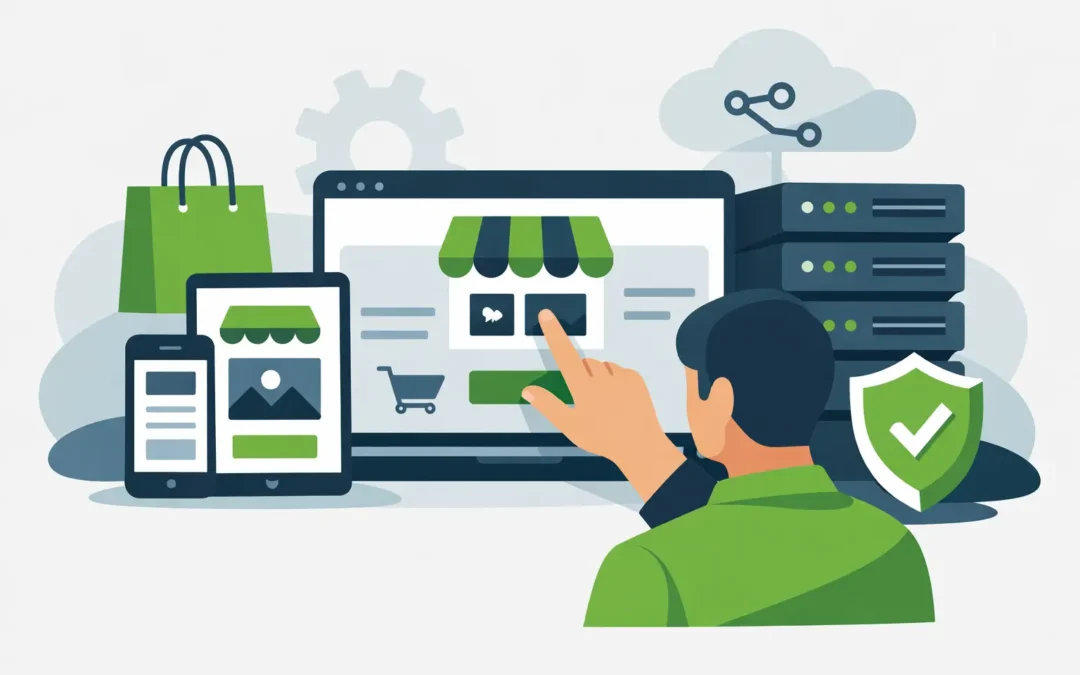
At its core, an ecommerce website builder with hosting combines two essential pieces. The builder gives you the tools to create pages, manage products, organize collections, and publish your storefront. The hosting side provides the server environment that keeps the store online, loads content, secures transactions, and handles visitor traffic.
That sounds straightforward, but the details matter. Some platforms package everything into a tightly controlled system with drag-and-drop editing, built-in checkout, and limited server customization. Others give you more freedom, often through WordPress or another content management system, while still bundling hosting, SSL, and support into one solution.
The advantage is convenience. You do not need to source hosting separately, connect multiple vendors, or troubleshoot compatibility issues from scratch. The trade-off is that convenience can come with restrictions, especially around performance tuning, plugins, custom code, and how easily you can move later.
Why hosting matters as much as the builder
Many buyers focus on templates first. That makes sense because design is the visible part. But hosting is what customers feel when they browse products, add items to the cart, or try to complete payment on a phone with a weak signal.
A good storefront builder on weak hosting still creates friction. Slow product pages increase bounce rates. Unstable uptime hurts trust. Poor server response can affect SEO and paid campaign performance because visitors leave before they convert. If your store handles customer accounts, payments, and order data, security also becomes non-negotiable.
This is why the best buying decision is rarely about the prettiest builder. It is about the balance between ease of use and dependable infrastructure. Fast SSD storage, SSL certificates, backups, malware protection, and responsive support are not add-ons in practice. They are part of the store experience.
How to evaluate an ecommerce website builder with hosting
The right fit depends on your business model, your technical comfort level, and how much you expect to grow. A startup selling ten products has different needs than an established retailer, subscription business, or agency managing several client stores.
Start with store complexity
If you are launching a basic catalog with a manageable number of products, a simpler builder may be enough. If you need product variations, advanced shipping logic, tax handling, custom checkout behavior, or integration with outside systems, you will want a platform that leaves room to expand.
This is where many businesses outgrow entry-level tools. They choose a basic setup because it is easy to start, then run into limits when they need custom workflows or better performance. It is cheaper to choose a platform with a reasonable growth path than to rebuild six months later.
Look closely at performance features
Hosting quality shows up in small technical details. SSD-based infrastructure, current PHP versions where applicable, server-side caching options, content delivery support, and optimized application environments all contribute to faster page loads.
For ecommerce, performance is not just a technical metric. It affects cart completion, ad efficiency, and customer trust. A store that feels responsive tends to convert better, especially on mobile where patience is short.
Check security by default, not as an afterthought
Any ecommerce environment should include SSL, secure account access, and a clear approach to updates and monitoring. Backups matter too. If something breaks during an update or an attack compromises files, recovery time becomes a business issue, not just a technical one.
If you are comparing providers, ask what security protections are included from day one. Features such as malware scanning, web application protection, spam filtering for business email, and backup tools help reduce operational risk.
Understand support before you need it
Support is easy to overlook until checkout fails on a weekend or a plugin update takes down a product page. For store owners without an in-house technical team, responsive support can be the difference between a short interruption and lost revenue.
The most useful support is not just available 24/7. It is capable. You want a provider that can help with hosting issues, SSL setup, migrations, application installs, and scaling decisions as your store grows.
Builder-first platforms versus hosted open-source setups
This is where the decision usually becomes practical. Builder-first platforms are attractive because they reduce setup time. You can pick a template, add products, connect payments, and start selling quickly. For many first-time merchants, that simplicity is valuable.
The limitation is control. You may have fewer options for server-level changes, custom integrations, or advanced performance tuning. Some platforms also make migration harder than expected once your catalog, customer data, and workflows are established.
A hosted open-source setup, such as a store built on WordPress and ecommerce extensions, usually offers more flexibility. You can customize design and functionality more deeply, choose from a wider application ecosystem, and scale hosting resources as traffic increases. The trade-off is that the environment needs stronger hosting and more active maintenance.
For businesses that expect to grow, need custom features, or want more ownership of the stack, this route often makes more sense. For businesses that want the fastest path to launch and can accept some platform limits, a closed all-in-one builder may be the better fit.
When scalability should shape your choice early
Many stores do not stay small for long. Seasonal promotions, social traffic, paid campaigns, and product launches can push a site past the limits of entry-level hosting faster than expected.
That is why it helps to think beyond launch. Can the provider move you from a starter plan to cloud, VPS, or dedicated resources without forcing a full migration? Can you add security services, managed support, or stronger performance tools as revenue grows?
A provider that supports the full hosting lifecycle gives you more options. Instead of changing companies every time your requirements change, you can scale within one ecosystem. That saves time and reduces risk, especially for stores with active traffic and customer data.
Common mistakes to avoid
One common mistake is choosing based on monthly price alone. Low-cost plans can work for early-stage stores, but only if they still provide acceptable speed, uptime, and security. Cheap hosting that causes missed sales is rarely a bargain.
Another mistake is assuming all bundled hosting is equal. Two platforms may both advertise hosting, but one may offer stronger infrastructure, backups, SSL, migration help, and better support coverage.
Businesses also underestimate migration. Moving a store later can involve product data, customer records, order history, email setup, DNS changes, and design adjustments. It is worth choosing carefully the first time.
Who should choose which path
A solo founder or local business launching its first store may benefit most from a straightforward ecommerce website builder with hosting that minimizes setup work. Speed to market matters, and ease of use can outweigh deep customization.
A growing ecommerce brand, developer, or agency usually needs more flexibility. In that case, hosted WordPress, cloud hosting, VPS hosting, or another scalable environment may be the smarter long-term investment. The goal is not complexity for its own sake. The goal is keeping control as the business becomes more demanding.
For companies that want both accessible onboarding and room to scale, working with a provider like Charter Hosting can make the decision easier. You can start with the level of simplicity you need and still have a path to stronger infrastructure, security services, and hands-on support as the store expands.
The best choice is the one that fits your next stage
An ecommerce website builder with hosting should help you sell, not trap you in a setup that feels easy on day one and limiting by month six. The right platform gives you a reliable storefront now, while leaving enough space for better performance, stronger security, and future growth.
If you are comparing options, focus less on polished demos and more on what happens after launch. When traffic increases, updates pile up, and customers expect a fast and secure checkout, the value of good hosting becomes very clear. Choose a platform that can handle that moment before it arrives.